
Sometimes Team Building Doesn’t Look Like Team Building
Most meetings focus on updates, deadlines, project status, and next steps. Ours do too.
But over time, we realized something was missing — especially in remote and hybrid work environments.
You can work with someone for months, message them daily on Slack, collaborate on projects constantly… and still barely know them as a person.
So we added one small rule to our Monday morning team calls:
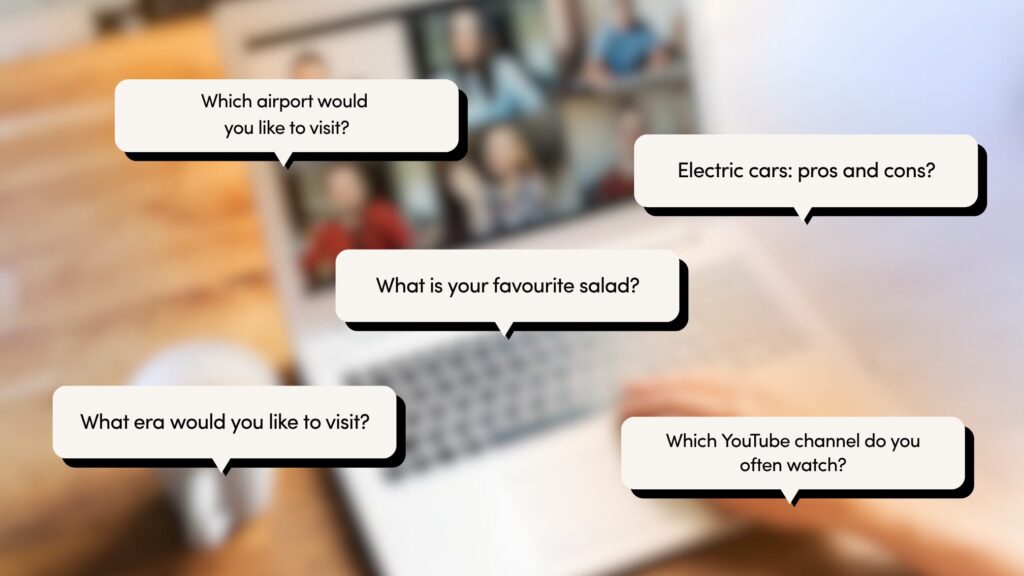
Before the meeting ends, someone asks a completely random question.
No work topics allowed. No hidden productivity lesson. No action items.
Just a question.
And surprisingly, it changed how we work together more than many formal “team building” exercises ever did.
The Simple Team Building Habit We Didn’t Expect to Matter So Much
Some questions are ridiculous.
Some are oddly philosophical.
Some immediately divide the team.
Examples:
- What food is completely overrated?
- Which fictional world would you actually want to live in?
- What’s a hobby you’d probably love if you had unlimited free time?
At first, it just felt like a fun way to end meetings.
But after a while, something shifted.
People started becoming more than profile pictures and task updates.
You start remembering:
- who’s obsessed with Formula 1
- who bakes sourdough every weekend
- who has unexpectedly strong opinions about airports
And those small details matter more than people think.
Why Small Human Moments Improve Team Communication
A lot of companies talk about workplace culture as if it’s something built through major initiatives.
But culture is often shaped through repeated small interactions.
Especially in remote teams.
Without informal conversations, work communication can slowly become transactional:
- task
- response
- update
- deadline
- repeat
Over time, that creates distance — even between highly collaborative teams.
Adding small moments of personality changes the dynamic.
People communicate more naturally.
Meetings become less rigid.
Collaboration feels easier because there’s already a sense of familiarity and comfort.
And importantly, it creates space where people can simply exist as humans instead of always operating in “work mode.”
Remote Team Building Doesn’t Need to Feel Forced
One reason many team-building activities fail is because they feel overly structured or performative.
People can usually tell when an activity is trying too hard to create connection.
What worked for us was the opposite:
- low pressure
- no mandatory participation energy
- no complicated setup
- no productivity framing
Just curiosity.
And consistency.
That consistency matters.
A single random question won’t transform a team overnight.
But repeated over months, those conversations quietly build trust and familiarity in ways most workplace systems don’t.
The Unexpected Impact on Collaboration
Interestingly, the biggest change wasn’t morale.
It was communication.
People became more comfortable speaking up.
Internal conversations became warmer and more relaxed.
Even problem-solving improved because team members felt more comfortable sharing ideas openly.
It’s hard to quantify that kind of shift in a spreadsheet.
But you notice it in how teams interact every day.
Sometimes the Smallest Rituals Have the Biggest Impact
Modern work moves fast.
Calendars fill up quickly.
And many teams spend most of their time optimizing workflows, systems, and productivity.
But sometimes, one simple question at the end of a meeting can do something months of Slack messages can’t:
Help people genuinely get to know each other.
And that changes everything.